


Lead: the free sample
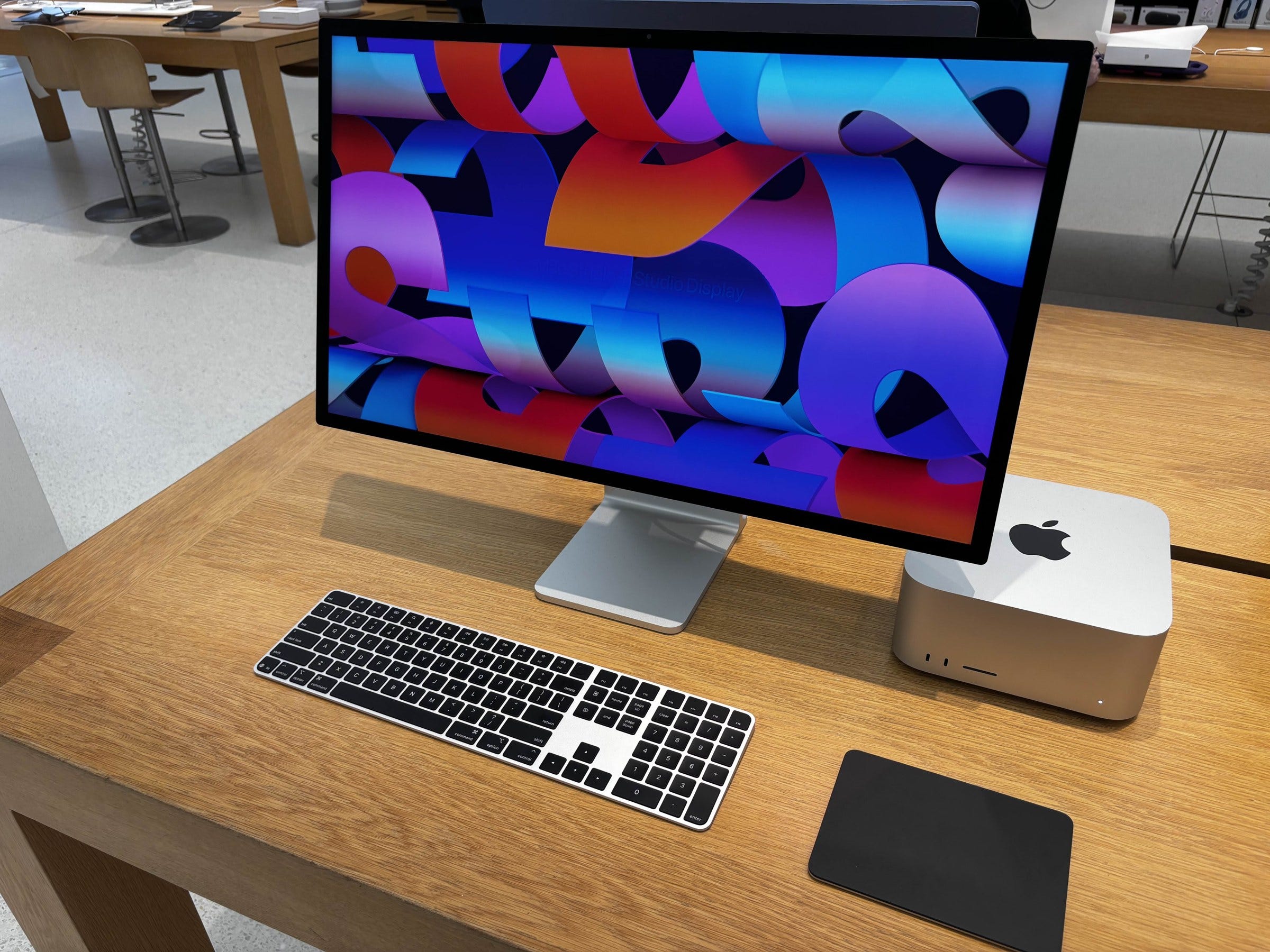
On 15 October Meta released the weights of Muse Spark Open, an 816-billion-parameter model built for coding and agentic work, with a context window of one million tokens. “Weights” means the finished model file: anyone can download it and run it on their own hardware. Meta says two Apple Mac Studio computers with the M5 Ultra chip can run it, and the file is also available through the model catalogues of Amazon, Google and Microsoft, so a company can host it inside its own cloud account.
The bill, per CNBC: a Mac Studio with the required chip and 256GB of memory starts at $10,799, and you need between two and four of them. That is a five-figure purchase order, plus the people to keep the machines running.
One lazy take says open weights means free AI, so cancel the vendor contracts. The other says it is a hobbyist toy. Both skip the part your CFO cares about. Meta’s own AI chief, Alexandr Wang, told CNBC these are not the most capable models Meta has built (the best one stays proprietary), and that he expects companies to tinker at small scale and then ramp up their usage. A free sample at the supermarket is generous in the same way. The licence adds limited commercial terms, so have counsel read the Muse Model License before anyone builds on it.
What changes is your position at the table. A model you could run yourself is a price anchor and an exit option. When your vendor’s renewal arrives, “what would it cost us to run a good-enough model ourselves?” now has a real number attached: hardware you can buy plus the staff to run it. Meta and Apple also say running it locally adds security and saves money. Those are sales claims, so test them before you repeat them.
My view: most companies will not switch. They should still test it, because a vendor that knows you tested it negotiates differently. Pick one workload, run the same tasks on both options, and write down quality, cost and who maintains it.
Signals
Digital money: the digital euro is in its final negotiating round. ECB Executive Board member Piero Cipollone said on 6 October that the Council and Parliament have both set their positions (Parliament voted 416 to 169 in July) and are now negotiating, with the European Council asking for a conclusion by the end of the year. If that holds, the ECB aims for a first issuance in 2029, after a pilot with 36 payment providers in the second half of 2027. He also noted that two-thirds of euro area card payments rely on international schemes, which is the cost line your payments team should look at.
Health science: new GLP-1 numbers land Thursday. KFF’s 2025 survey found that 43% of US firms with 5,000 or more workers covered GLP-1 drugs for weight loss, up from 28%. Among those firms, 59% said use was higher than expected and 66% said the drugs had a significant impact on prescription spending. KFF publishes its 2026 survey on 22 October. If you employ people in the US, that is your benefits renewal conversation arriving early.
AI governance: the board saw the incident, then moved on. An IBM survey of 3,221 executives in eight countries (fielded by Censuswide, 14 to 24 September) found that 80% said an AI incident had reached their board or C-suite in the past year, and only 40% changed their governance in response. Only 37% have a board-reviewed estimate of the financial risk from governance gaps. IBM sells in this market, so read it as a vendor survey with disclosed methods.
One question for your next board meeting
“If our main AI vendor raised its price at renewal, which of our workloads could we move to a model we run ourselves, and has anyone tested it?”
Hit reply and tell me which workload you would test first. I read every reply. And if a colleague has an AI renewal coming up this quarter, forward this to them before they sign.
David
Sources
Meta AI Research, “Introducing Muse Spark Open”, 15 October 2026. https://research.meta.ai/blog/muse-spark-open
CNBC, “Apple and Meta team up to make Muse AI model run on Mac computers”, 15 October 2026. https://www.cnbc.com/2026/10/15/apple-meta-partner-ai.html
Piero Cipollone (ECB), “Money in the digital age: digital euro, tokenisation and the role of central banks”, speech, 6 October 2026. https://www.ecb.europa.eu/press/key/date/2026/html/ecb.sp261006~0da978f159.en.html
European Parliament, “Digital euro: MEPs ready to start negotiations”, press release, 9 July 2026. https://www.europarl.europa.eu/news/en/press-room/20260708IPR46377/digital-euro-meps-ready-to-start-negotiations
KFF, 2025 Employer Health Benefits Survey (GLP-1 section; 2026 release date noted on page). https://www.kff.org/health-costs/2025-employer-health-benefits-survey/
IBM Newsroom, “IBM Study: Eight in Ten EMEA Enterprises Escalate AI Incidents to Board or C-Suite as AI Agents Test Governance”, 14 October 2026. https://newsroom.ibm.com/2026-10-14-ibm-study-eight-in-ten-emea-enterprises-escalate-ai-incidents-to-board-or-c-suite-as-ai-agents-test-governance